

Building the missing link between education and employment

South Africa does not only have a youth unemployment crisis. It has a career development crisis — and the consequences are structural. Every year, millions of young people move through the education system without understanding how their strengths align with real opportunities in the economy.

They make subject choices without guidance, pursue qualifications without exposure, and graduate into a labour market they were never equipped to navigate. This is not a failure of ambition or talent. It is a failure of systems.

Founder Isaac Maisha Mongali

CareerKit was established in Durban on 21 December 2021 to confront that failure directly. Its founding vision is unapologetically ambitious: to build Africa’s leading career development ecosystem, one that enables young people to move from self-awareness to self-actualisation, and in doing so unlock the continent’s most valuable and underutilised resource — human potential.

From the outset, CareerKit rejected the idea that career guidance is a peripheral or “soft” intervention. Instead, it positions career development as economic infrastructure. In an economy marked by skills mismatch and high unemployment, early career clarity is not optional; it is foundational to labour market efficiency.

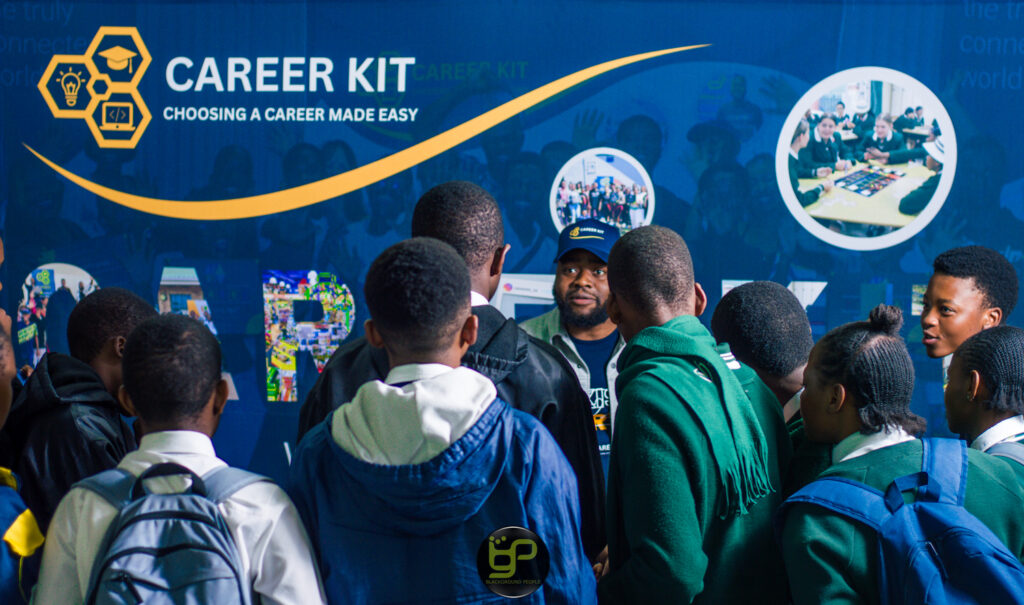
At the centre of CareerKit’s approach is a simple but often overlooked insight: young people cannot plan for futures they cannot see. For learners in township and rural schools, career advice is frequently abstract, inaccessible, or entirely absent. Psychometric testing is expensive and intimidating, exposure to professions is limited, and teachers are often overburdened with responsibilities far beyond career guidance.

CareerKit responds by meeting learners where they are. Its RIASEC Board Game, grounded in established career psychology, transforms self-discovery into a shared, engaging experience. Instead of being assessed, learners participate. They explore their interests, strengths and preferences in a way that feels accessible and affirming, often encountering structured career guidance for the first time in their lives.

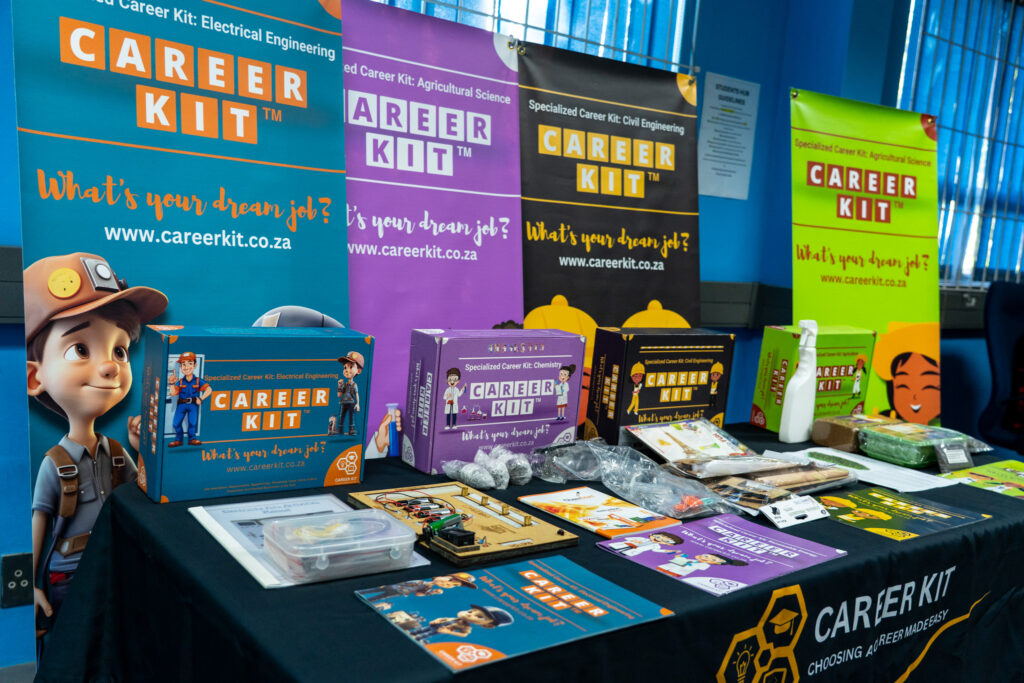
But self-awareness alone does not solve unemployment. CareerKit understands that clarity must be followed by exposure. This is where its specialised career kits play a critical role.

By simulating real professions from engineering and renewable energy to digital media and healthcare, learners gain practical insight into what different careers actually involve. These are not aspirational descriptions; they are tactile, hands-on encounters with the tools, thinking and problem-solving demanded by real work.

Crucially, this exposure is not random. CareerKit’s model is intentionally demand-led. Careers introduced to learners are aligned with labour market data, SETA priorities, employer insights and national skills strategies. In a country where youth unemployment exceeds 45 percent, CareerKit does not encourage exploration for exploration’s sake. It guides young people toward pathways where opportunity exists, and where skills shortages threaten economic growth.

This alignment between individual potential and economic demand is where CareerKit’s labour market impact becomes most visible. Through workshops, career days and partnerships with schools, NGOs and corporates, CareerKit has reached more than 15,000 learners across over 100 schools nationwide.

Behind this reach are tangible shifts: learners making informed subject choices, young women seeing themselves in STEM pathways, and graduates recognising that employability is built through skills, exposure and readiness — not qualifications alone.

CareerKit’s impact extends beyond learners into communities themselves. Recognising the shortage of trained career guidance professionals in low-resource schools, the organisation developed its Train-the-Trainer Facilitator Programme. This initiative recruits unemployed youth from township and rural communities and equips them to become certified CareerKit facilitators.

These facilitators earn income delivering workshops in schools and community organisations, turning career guidance into a viable employment pathway.

For many participants, the programme represents a first step into meaningful work. One young woman from KwaMashu, unemployed for two years after matric, described the experience as giving her “a purpose, a profession, and the confidence to lead classrooms.” Within weeks of training, she was facilitating sessions for hundreds of learners and earning a stable income, while studying part-time toward an education qualification.

Her story reflects a deliberate design choice: CareerKit does not only prepare young people for work, it creates work through the process of preparing others.

This layered impact is intentional. CareerKit strengthens employability by building clarity, exposure and workplace readiness. It creates jobs through facilitation, content development, assembly, logistics and programme delivery. It improves labour market efficiency by reducing skills mismatch and guiding young people toward high-demand sectors.

And it does so in environments where connectivity is limited and resources are scarce, through tools designed to work offline and at scale.

CareerKit’s operating values are evident in how the organisation works, not just what it says. Empowerment shows up in the insistence that young people must take ownership of their futures through informed choices. Innovation is reflected in the blending of play, psychology and technology to reimagine career guidance.

Accessibility is embedded in tools designed for low-resource contexts. Integrity is demonstrated through impact-driven, data-informed decision-making. Collaboration underpins partnerships with schools, corporates, NGOs, SETAs and government actors that enable scale.

Looking ahead, CareerKit’s ambition is to extend this ecosystem through technology. The CareerKit Platform, scheduled for launch in 2026, is designed as a digital bridge between education and employment. Using AI, career psychology and labour market analytics, it will recommend pathways aligned to both individual strengths and economic demand.

It will connect learners to mentors, tutors and industry specialists, and surface internships, bursaries and job opportunities. In doing so, it aims to transform career development from a once-off intervention into a continuous, guided journey.

The scale of South Africa’s unemployment challenge demands systems that can reach millions, not thousands. CareerKit’s evolution reflects this understanding. What began as a response to exclusion has grown into a scalable model capable of influencing how young people move through education, training and into work.

South Africa will not reduce youth unemployment by expanding access to education alone. Nor will it solve the problem by producing more qualifications that remain misaligned with labour market demand.

Addressing the skills mismatch crisis requires interventions that help young people understand themselves early, see opportunity clearly, and navigate pathways with intent rather than guesswork.
CareerKit offers a proven, practical response to this challenge. It works where resources are limited. It creates employment while preparing people for work. And it aligns individual potential with economic need.

The question is no longer whether South Africa can afford to invest in career development at scale. It is whether it can afford not to. For employers, funders, SETAs, education leaders and policymakers, the call is clear: if reducing skills mismatch and unemployment is a serious national priority, then systems like CareerKit must move from the margins to the mainstream.

This is not about guidance alone. It is about building the infrastructure that allows talent to find its place in the economy — and ensuring that a generation defined by potential is no longer defined by unemployment.

CareerKit’s innovative approach to career guidance has been recognized by prestigious organizations worldwide, validating our impact and commitment to excellence.

Careerkit is an innovative online platform that empowers individuals in their career development journey by providing a wide range of tools, learning resources, and career guidance products. It helps users explore career options, develop essential skills, and achieve their professional goals.

TIMELESS CAREER LEGACY.

Labour market documentaries, tracing career pathways and preserving legacy.

LABOUR-MARKET INTELLIGENCE & CAREER PATHWAYS PUBLICATION

Career Indaba® Magazine

Receive curated career intelligence on shifting labour demands.

This field is required.

Read our privacy policy for more info.

LABOUR-MARKET INTELLIGENCE & CAREER PATHWAYS PUBLICATION

Career Indaba® Magazine

Receive curated career intelligence on shifting labour demands.

This field is required.

Read our privacy policy for more info.

Start typing and press Enter to search