

Making education a lifeline

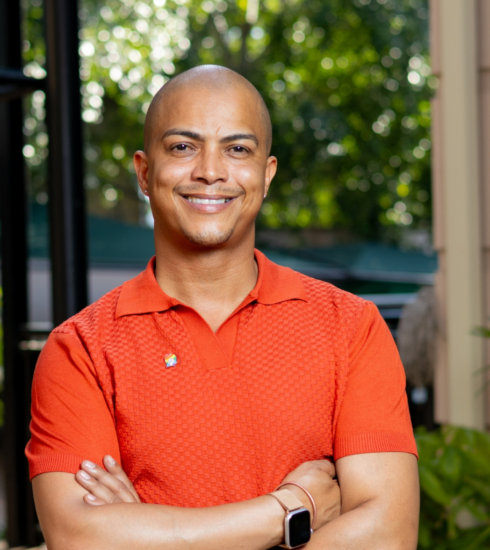
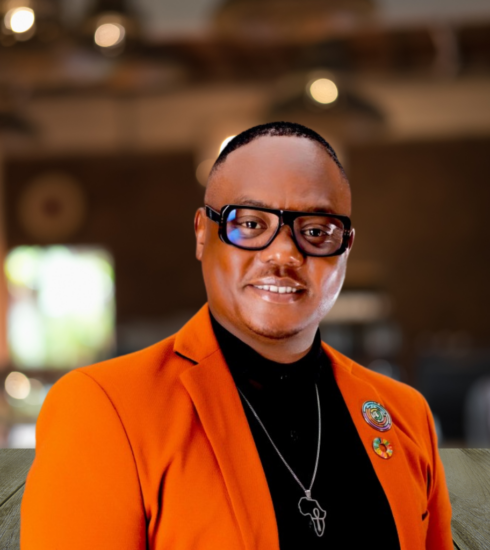
Simon Sandy White’s story is a layered South African journey shaped by identity, language, entrepreneurship, and faith. From township enterprise to national ICT transformation, he has spent decades building institutions, advancing economic inclusion, and challenging education to become a real lifeline for independence.

Although I have both Black and Coloured lineage, I have always maintained that I am South African. I never wanted to give credence to the divisive tribal politics that apartheid advanced. We grew up speaking many South African languages mostly Afrikaans and Setswana and in places like Chiawelo, we often spoke Tshivenda and Setswana too.

Navigating identity was not simple. In some environments, Coloured people would use racial slurs. In others, when we visited Chiawelo, Soweto, and family members, we would be accused of being “Boesmans.” My early experience taught me an uncomfortable truth: prejudice can exist across communities. It shaped my insistence on dignity, unity, and a South African identity that refuses division.

When I went to the University of the Western Cape, I was politically conscientised at another level. Steve Biko, Robert Mangaliso Sobukwe, charterist leaders, Bishop Desmond Tutu, and Dr Alan Boesak all played a major role in shaping how we understood the struggle.

UWC produced many activists, and the UDF helped shape and advance the democratic struggle. To this day, I firmly believe Bishop Tutu and Dr Boesak played a far bigger role in advancing liberation than most popular politicians receive credit for.

At home, my biggest influence was my mother. Despite her low levels of formal education, she was an ardent entrepreneur. Like many South Africans, she had a rough upbringing.

We knew poverty and then we watched her transform our lives through hard work, determination, and entrepreneurship. We were the first people in Ametis Street to buy a colour television and own a Combi. That might sound trivial now, but back then it was significant.

My mother had one profound statement: “I know poverty, and I never want to see it ever again.” Even with success, she remained grounded, helped people, and led by example.

As a child, I accompanied her on business and sales trips. She had an eye for bargains and opportunity. Entrepreneurship became natural and not theoretical. It was lived. It was practical. It was survival and service at once.

One of my earliest business lessons came from train sales. I learned the trade through Indian merchants and by watching experienced sellers. My mentor in that world was Bra Chico and I respected him, but I also feared him. He had a scar next to his left eye that, to me, foretold danger.

Eventually, I decided to go on my own. I told him I was no longer going to sell for him because it was affecting my schoolwork, even though that wasn’t the full truth. He tried to convince me to stay and offered more money, which convinced me even more that it was time to move.

He got angry and threatened me if he ever saw me selling on “his” trains again. I avoided him for a while, changed my hours, and even introduced small “bonuses” like sweets to attract customers. It worked until one weekend we locked eyes. I panicked, ran through the coaches, and felt like a thief even though I had stolen nothing. It was a terrible ordeal.

“The true measure of education is when it becomes a lifeline toward economic independence.”

Later, after tensions cooled, I saw him again in Kliptown. To my surprise, he hugged me and asked how I was doing. Whether he forgave me or was relieved I wasn’t competing anymore, I don’t know, but Bra Chico remains one of my first true mentors and business trainers.

In hindsight, I’m glad I moved away from that business. For me, it was about making money. For him, it was a livelihood supporting a family. He needed it more than I did. Still, I carried the lessons forward: trust, customer insight, reliability, and value creation.

After matric, I wanted to study in Cape Town but I faced a dilemma. I had businesses with huge potential, including a horse racing “runner” model where I placed bets for adults who trusted me. My mother opposed me leaving and wanted me to study through UNISA while working.

A turning point came when I took a holiday job at an optometrist in Johannesburg. After about two weeks, the owner paid me and added extra money, telling me: “I urge you to go and study.”
That moment compelled me to change my mind against my mother’s wishes.

My mother’s skepticism about education came from what she had seen, too many educated people in the township struggling to show for it.

But I had also seen the power of education and the power of entrepreneurship. Over time, entrepreneurship became my emphasis, because I saw a persistent failure in education: too often it did not align with business needs or empower learners to become economically independent and financially secure.

That question became part of my life’s work: why does education so often fail to become a lifeline? It shaped my thinking, my contribution to industry bodies, and my mission to build real entrepreneurial capability.

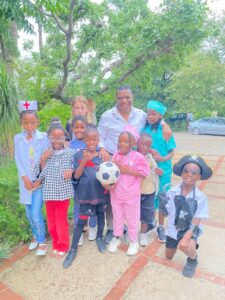
Learner Career Day 2025F – Entrepreneurship in South Africa Young Innovators

My professional journey includes teaching commercial subjects, leading an ICT research company, and shaping key institutions in the black ICT ecosystem. I played a pivotal role in forming the Black IT Forum (BITF) and served as its General Secretary. We built structures, governance, and impact.

We created BLITEC, an empowerment vehicle that, at its height, held serious value and generated dividends for many black ICT professionals. I also learned hard lessons about governance, opportunism, and the danger of trusting without accountability. When organisations stop being builder-led and become politically mechanised, value collapses.

My takeaway is, not everyone you onboard will add value. Protect the vision. Protect the culture. Measure contribution.

Today, I serve as Founder and Head of Entrepreneurship and Innovation at Chartwell Entrepreneurship and Leadership School. I have championed initiatives that strengthened financial literacy and entrepreneurship outcomes, and I am spearheading the African Entrepreneurship and Innovation Museum, a world-first concept planned for completion in 2029.

If I had to summarise my philosophy, it is this: a productive and solution-driven mindset can be a lifestyle. When it becomes embedded in your persona, you naturally execute, add value, and become dependable. You don’t wait for permission to contribute, you contribute because that is who you are.
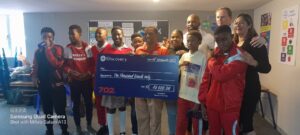
702 & Discovery Invest Photos – Entrepreneurship in South Africa Young Innovators

I also believe trust demands accountability. Trust is not emphasised enough in business, yet it is often the difference between success and collapse.

South Africa’s unemployment crisis requires a different approach, one that builds a real generation of entrepreneurs who create innovative centres of economic activity, unlock new value, and create jobs at scale.
This career memoir feature is written in the contributor’s own words and has been lightly edited. Career Indaba® Magazine preserves the authenticity of each voice as part of Africa’s living career memoir archives.

LABOUR-MARKET INTELLIGENCE & CAREER PATHWAYS PUBLICATION

Career Indaba® Magazine

Receive curated career intelligence on shifting labour demands.

This field is required.

Read our privacy policy for more info.

LABOUR-MARKET INTELLIGENCE & CAREER PATHWAYS PUBLICATION

Career Indaba® Magazine

Receive curated career intelligence on shifting labour demands.

This field is required.

Read our privacy policy for more info.

Start typing and press Enter to search