

Building inclusive mobility payments
Along the way, milestones started stacking in ways that reminded me what’s possible when you stay consistent. At UWC, I served as class representative for Biotechnology throughout my studies and was elected to the University Leadership Team, representing UWC at national university leadership forums.
I received the Golden Key International Honour Society award for academic excellence and later became Vice President of Golden Key South Africa. I was also awarded Student Achiever of the Year, recognised as one of the top-performing students across the entire university.
Professionally, working with Standard Bank’s Innovation Lab was a key milestone, not only because it formalised my design thinking practice, but because it positioned me inside the fintech space building practical tools like Feenix. My entrepreneurial milestones then moved through media, consulting, AI-driven fintech, and eventually co-founding Loop, an inclusive mobility and payments company focused on emerging markets.
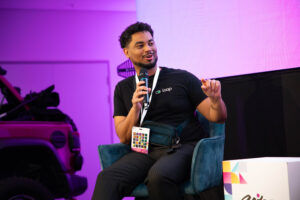 Under my leadership, Loop received the Presidential Award for Social Enterprise of the Year, becoming one of South Africa’s recognised innovation-led businesses. I’ve also been honoured with accolades including Africa 40 Under 40 Science & Technology Winner, Global 40 Under 40 Winner, Invest Cape Town Ambassador, and the United Nations JCI Awards including Top 10 Young People in South Africa and Top Young Person in Economics & Entrepreneurship.
Most recently, I was appointed Ambassador for the City of Cape Town on a three-year term, a milestone that reflects my commitment to economic growth, mobility innovation, and inclusive development in the city.
But when I’m honest, what matters most is the real-world impact, building systems that open doors for students, small businesses, township entrepreneurs, drivers, commuters, and communities who deserve better access, dignity, and mobility. The recognition is meaningful, but the work and the people it serves, is what truly drives me.
My career legacy is defined by building practical, inclusive systems that make life easier for people in the emerging market. I want to be remembered for helping create a version of African innovation that is human-centred, accessible, and designed for real-world conditions, not theoretical models, but solutions that improve how people move, pay, and participate in the economy.
 A major part of that legacy is the work I’m doing through Loop, transforming public transport through cashless mobility, supporting small businesses with digital payments, and proving that world-class technology can be built in Africa for Africa. If I am remembered for anything, I want it to be the contribution of building systems that give people dignity, simplicity, and opportunity in their daily lives.
I also want my legacy to reflect the role of design thinking in shaping practical problem-solving across the continent. I’ve used it to help entrepreneurs validate ideas, strengthen their businesses, and design solutions that genuinely work for the communities they serve. Through mentoring and teaching, I hope to influence how the next generation of African innovators approach challenges.
As someone with dyslexia and a neurodivergent way of processing the world, I also want my career to stand as proof that success is not defined by traditional structures, perfect academics, or how you fit into a system. I want to show young people, especially those who feel “different” that their minds are an advantage, not a limitation.
One of the biggest challenges in my journey was balancing full-time academics with the responsibility of building a business. My father passed away while I was still in high school, and by the time I reached university, I had to create my own financial stability. I was constantly applying for bursaries, studying, and running my business at the same time, not because it was ambitious, but because it was necessary.
As my business started growing, the demands on my time increased to the point where I couldn’t give my studies the focus they needed. I eventually had to make a difficult decision to continue pushing towards graduation or prioritise the income and opportunities my business was creating.
I chose the business and stepped away from my degree in my final year, a decision I don’t regret, but one that came with a lot of pressure at the time.
Looking back, that season taught me something I still use today: you don’t need to be the smartest person in every room, and you don’t need to do everything yourself. Success in business isn’t about doing it all, it’s about building the right team, hiring people more skilled than you in specific areas, and knowing when to lead and when to trust others.
A major turning point in my career was the moment I entered the public transport and mobility sector through the work we were building at Loop. Until then, my path had been rooted in design thinking, fintech, entrepreneurship, and supporting businesses through innovation, but stepping into the taxi and commuter ecosystem fundamentally reshaped my purpose and the direction of my work.
What started as a payments challenge quickly revealed itself to be a much deeper opportunity, the chance to modernise one of Africa’s most essential but underserved industries. As I became more entrenched in the taxi and public transport environment, I realised how much inefficiency, risk, and financial exclusion existed in a system millions of people rely on daily. It was a sector with real problems, real people, and almost no meaningful technological support.
That was the point where my career shifted. I knew I needed to commit fully, build long-term solutions, and redefine what innovation could look like in an African context. It was no longer about offering services to businesses, it became about transforming systems, improving mobility, enabling safer transport, and giving drivers and commuters tools that bring dignity and opportunity.
Building Loop became the bold step that aligned my skills with a larger purpose of improving how Africa moves and pays. That pivot has shaped everything since my leadership, my impact, and the legacy I’m working toward in inclusive mobility and emerging-market technology.
I’ve been shaped by mentors, role models, and people who saw potential in me long before I fully understood it myself. My late father shaped my early work ethic and resilience. At university, lecturers and leaders created environments where I could stretch, take on leadership roles, and grow beyond the classroom.
In my professional life, I’ve worked alongside people who challenged my thinking across biotech, design thinking, fintech, and mobility and that helped me refine how I build for real people.
But the communities I serve have been my greatest teachers, drivers, small businesses, commuters, entrepreneurs, and emerging-market users. They remind me that leadership is not about titles but about impact. Put people first, listen deeply, and create systems that give others the chance to rise.
My advice is simple: don’t let your circumstances decide your future. Where you start is not where you have to end up. You have the ability to turn challenges into opportunities and redesign the path that’s been handed to you.
Be curious, stay adaptable, and don’t wait for permission to begin. You don’t need to have everything figured out, start with what you have, learn as you go, and build your confidence through action. Remember, you don’t have to be the smartest person in the room; you just need to surround yourself with people who are skilled, honest, and aligned with your purpose.
Most importantly, believe in the value of your perspective. Whether you’re neurodivergent, come from an unconventional background, or simply think differently, that difference is your strength. Use it.
And when you succeed, don’t close the door behind you. Bring people with you. The real legacy is not what you achieve alone, but the opportunities you create for others along the way.
My vision for the future is to help create a world where people believe they can define their own path, no matter their circumstances. I want to show that your environment, your background, or the challenges you’ve faced don’t have to limit what you can achieve. If anything, they can become the fuel that shapes your purpose.
What I want to leave behind is a mindset that you can turn obstacles into opportunities, think differently, and still succeed. As someone who is neurodivergent and has had to learn, adapt, and build my own way of working, I want the next generation to see that being different is not something to hide, it’s something to use.
Ultimately, the impact I want to leave is human, people who believe in themselves more deeply, think more boldly, and create opportunities not just for themselves but for others.
If I can inspire even a few people to change their minds about what’s possible for their own lives, that would be my greatest contribution.