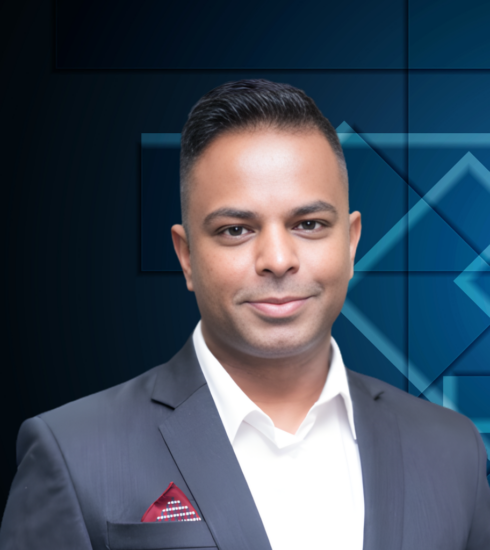
Qobolwakhe Dube represents a new generation of African capital markets leadership, deeply intellectual, globally trained, and grounded in community. His journey from Bulawayo to boardrooms across continents reflects the power of opportunity, curiosity, and African excellence in data-driven finance.
I am Ndebele, born and raised in Bulawayo, Zimbabwe, where I lived through to my late teens before relocating to South Africa to further my studies. Like many Africans, my identity has been shaped not only by my nationality and home language, but by the people and cultures I have been surrounded by throughout my life.
Growing up in culturally diverse environments, I speak five languages, and they form the lens through which I understand my Africanness. I have always found it fascinating how African experiences are both deeply similar and incredibly vast at the same time.
At the centre of all of them, however, is community. It takes a village, not just to raise a child, but to grow careers, confidence, and purpose. Being African, to me, means understanding that we are the sum of the efforts of those around us.
My journey into data began almost by accident. While at university, one of my first jobs was a data analyst role in the economics department. I was simply looking for extra income, but that role became the foundation of my career.
We worked on cleaning and analysing census and survey data, and that was my first exposure to large datasets long before I knew I would spend my life in the capital markets industry.
I was already comfortable with coding, so the technical learning curve was manageable. What truly challenged me was learning how to think differently about problem-solving, how to move from theory to application, from abstraction to insight. That shift stayed with me.
My academic journey has been long, demanding, and deeply formative. I hold five university degrees in total, four from the University of Cape Town and one from Macquarie University in Sydney including two Ph.D.’s.
It began at Christian Brothers’ College in Bulawayo, where I completed my A-Levels. The culture of that institution nurtured discipline, curiosity, and a deep respect for learning.
After high school, I enrolled for Actuarial Science at UCT, as many mathematically inclined students do. I eventually dropped out in my third year and graduated instead with a B.Com in Economics and Finance. During my Honours year in Finance, I completed CFA Level 1, expecting to move directly into corporate.
Instead, I stayed on to complete a Master’s in Risk Management of Financial Markets at UCT. That programme changed everything. It led me to enrol for a Ph.D. in Quantitative Finance, and during my first year, an opportunity arose to collaborate with the Rozetta Institute in Australia.
Rather than deregistering, I secured a cotutelle agreement between UCT and Macquarie University, allowing me to pursue a second Ph.D. in Applied Finance simultaneously.
My life for the next few years was split between Cape Town, Johannesburg, and Sydney. That period was one of the greatest challenges of my life. For nearly four years, I relocated every four to six months, balancing two academic supervisors, an industry supervisor, and constant transitions.
Communication and learning how to manage upwards became survival skills. It was exhausting, but it shaped my resilience and clarity.
“African capital markets can go toe to toe with the world.”
There are two career stages that stand out as pivotal. The first was completing Rozetta’s industry Ph.D. programme, which placed students directly into industry. That exposure was transformative.
I eventually became the project lead for a platform developed for a major financial institution, gaining hands-on experience that bridged theory and practice.
The second was my move from academia into the corporate world, where I joined the Johannesburg Stock Exchange as a market structure specialist. This role was deeply aligned with my research and gave me a rare vantage point into the inner workings of capital markets.
I worked across electronic trading, market regulation, surveillance, and business development across multiple asset classes. Between these two milestones, I also explored the startup space as a founding data scientist at a company using data and AI to optimise solar energy systems.
Completing two Ph.D.’s remains my proudest personal achievement. Along the way, a classmate and I also published an empirical study on South African banks that received significant media coverage and was the first of its kind.
Ultimately, I hope to be remembered for contributing to the development of capital markets in South Africa and across the continent.
Recently, I made another bold move, leaving the Johannesburg Stock Exchange to take up a role at a sell-side broker. My purpose remains unchanged. This step was necessary because some parts of the industry can only be understood by existing within them. Growth requires proximity.
My journey is evidence of what becomes possible when deserving people are given opportunities and the right tools. My Ph.D. supervisors fought tirelessly to secure scholarships and support for me, not because they owed me anything, but because they believed I deserved the chance.
My first corporate manager also shaped my leadership philosophy by putting people first and trusting me with responsibility early on.
One phrase that anchors me comes from a popular Kwaito song: “As long as ngisaphefumula.”It means, as long as I am still breathing. To me, it is a reminder that until the very last breath, there is always another chance to do better, to try again, to achieve.
My hope for the future is that African capital markets will one day stand shoulder to shoulder with developed markets, leading in innovation, product development, integrity, and excellence.
This feature is written in the contributor’s own words and has been lightly edited. Career Indaba® Magazine preserves the authenticity of each voice as part of Africa’s living career memoir archives.